
Check Engine Light On? What Hollywood Drivers Should Do Before the Panic Sets In
You’re driving through Hollywood, FL, when an amber engine-shaped symbol appears on the dashboard. Your first thought may be, “How much is this going to cost?”
Take a breath. A check engine light is a warning that your vehicle’s computer detected a problem: not an automatic sign that the engine is about to fail. Some causes are simple. Others need prompt attention. The key is knowing what the light is telling you and deciding what to do next.
This guide explains when you can drive carefully, when you should stop, and why professional engine diagnostics in Hollywood, FL can prevent a small issue from becoming a major repair.
First, check whether the light is solid or flashing
The light’s behavior is your first decision point.
A solid check engine light
A steady amber light often points to an emissions, sensor, fuel, or engine-management issue. The vehicle may still feel completely normal, especially when the problem is just beginning.
If the light is solid and your car is running smoothly, you can usually drive a short distance to a qualified repair shop. Avoid hard acceleration, high speeds, towing, or unnecessary trips until the cause has been identified.
You should still schedule a diagnostic appointment soon. A car can feel normal while a sensor, ignition component, or emissions system is slowly creating more stress for the engine.
A flashing check engine light
A flashing light is more urgent. It commonly indicates an active engine misfire, meaning one or more cylinders are not burning the air-fuel mixture correctly. Unburned fuel can enter the exhaust and overheat the catalytic converter.
If the vehicle is shaking, losing power, stalling, making a choppy engine sound, or producing a strong fuel or burning smell, pull over as soon as it is safe. Shut the engine off and arrange roadside assistance or a tow rather than continuing to drive.
The EPA’s check engine light guidance also recommends minimizing driving and seeking repair quickly when the light is blinking. When in doubt, protecting your engine and catalytic converter is more important than trying to reach the shop under its own power.
What to do immediately after the light comes on
Before assuming the worst, take a few practical steps:
- Look for other warning lights. A temperature warning, low oil pressure light, or red warning symbol changes the situation. Pull over and shut the engine off.
- Pay attention to how the vehicle feels. Notice shaking, hesitation, reduced power, unusual noises, smoke, or strong odors.
- Check the gas cap. If the light appeared shortly after refueling, make sure the cap is present, undamaged, and tightened until it clicks.
- Write down what happened. Note the fuel station, recent repairs, weather, driving conditions, and any symptoms. These details can help a technician narrow down the fault.
- Do not clear the light before diagnosis. Erasing the code may also erase useful freeze-frame information showing what the engine was doing when the fault occurred.
A loose gas cap is worth checking, but do not assume it is always the answer. If the light stays on after several drive cycles, the vehicle needs a proper inspection.
Common reasons your check engine light may be on
Loose gas cap or another EVAP problem
The evaporative emissions, or EVAP, system stores and controls fuel vapors so they do not escape into the atmosphere. The gas cap helps seal that system.
A loose, cracked, or missing cap can cause a pressure leak and trigger the light. However, the problem may also be a cracked vapor hose, faulty purge valve, vent valve, or damaged seal.
Small EVAP leaks can be difficult to see and may not affect how the car drives. That is why a professional may need to perform a smoke test or another pressure-based test instead of simply replacing parts.
Oxygen sensor trouble
Oxygen sensors monitor the amount of oxygen in the exhaust. The engine computer uses that information to adjust the fuel mixture.
When an oxygen sensor becomes slow or inaccurate, you may notice reduced fuel economy, rough running, or a check engine light without any dramatic symptoms. Continuing to drive for a long time with an incorrect fuel mixture can place extra strain on the catalytic converter.
A sensor code does not always mean the sensor itself is defective. Wiring damage, an exhaust leak, or another fuel-mixture problem can create similar readings. Testing matters before parts are replaced.
Catalytic converter concerns
The catalytic converter helps reduce harmful emissions in the exhaust. A failing converter may trigger an efficiency code, reduce performance, or cause a sulfur-like smell. In severe cases, a restricted converter can make the engine feel weak when accelerating.
Catalytic converters often become victims of another problem rather than failing without a reason. Long-term misfires, oil contamination, fuel-mixture faults, or ignored oxygen sensor issues can damage the converter. Finding the original cause is essential if you want the repair to last.
Worn spark plugs or failing ignition coils
Spark plugs and ignition coils work together to ignite the air-fuel mixture. A worn plug, damaged coil, or poor electrical connection can cause a misfire.
Drivers may feel the vehicle stumble under acceleration, vibrate at a stoplight, or hesitate when merging onto I-95. The check engine light may be solid at first and begin flashing if the misfire becomes severe.
Modern engines, including Mazda Skyactiv engines, can be sensitive to ignition and air-fuel problems. If your Mazda has rough idle, hesitation, or a misfire code, our guide to Skyactiv direct-injection carbon buildup and intake cleaning may provide helpful background: but testing is still needed to identify the actual fault.
EVAP leaks and other sensor or air leaks
A vacuum leak, mass airflow sensor problem, intake leak, or fuel-delivery issue can upset the engine’s carefully controlled air-fuel mixture. These faults may cause poor fuel economy, uneven idling, or delayed acceleration.
Some drivers hear a faint hissing sound. Others notice nothing except the warning light. A scan code can point toward the affected system, but it does not always identify the failed part by itself.
Why Hollywood’s heat and traffic can matter
South Florida puts vehicles through repeated heat cycles. Under-hood temperatures, intense sunlight, humidity, and frequent cooling-system operation can accelerate aging in rubber hoses, plastic connectors, wiring insulation, and seals.
Stop-and-go driving adds another layer of stress. Idling in traffic and repeated acceleration around busy roads can increase engine load and exhaust heat. Short trips may also prevent the engine and emissions system from spending enough time at normal operating temperature.
These conditions do not create every check engine light, but they can expose aging components sooner. A small EVAP hose crack, weak ignition coil, or tired sensor may finally set a code after months of heat and vibration.
For more local maintenance context, see our guide to preparing a vehicle for Florida heat in Hollywood.
Why reading the code is only the beginning
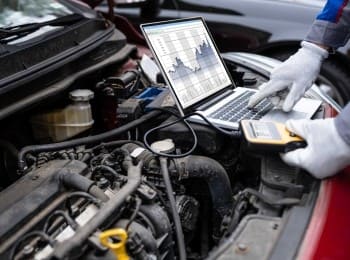
An OBD-II scan retrieves diagnostic trouble codes from the vehicle’s computer. Codes are valuable clues, but they are not always a complete diagnosis.
For example, an oxygen sensor code may be caused by the sensor, an exhaust leak, wiring, or a fuel-mixture problem. A misfire code may lead a technician to inspect spark plugs and coils, then move on to fuel delivery, air leaks, compression, or other mechanical concerns if the first checks are normal.
A professional engine diagnostic may include:
- Reading stored, pending, and permanent trouble codes
- Reviewing freeze-frame data from when the fault occurred
- Checking live sensor readings and fuel trims
- Inspecting wiring, connectors, hoses, and intake components
- Testing spark plugs, ignition coils, and fuel delivery
- Performing an EVAP smoke test when appropriate
- Checking compression or mechanical condition if ignition and fuel systems test normally
- Confirming the repair with a road test and system recheck
This step-by-step process helps prevent “parts swapping,” where expensive components are replaced without proving they caused the problem.
When to see a local mechanic in Hollywood, FL
You should arrange prompt service if the check engine light remains on, even when the vehicle seems to drive normally. Delaying diagnosis can allow a minor emissions or ignition issue to become a damaged catalytic converter, poor fuel economy, or a drivability problem.
Stop driving and seek assistance if you notice:
- A flashing check engine light
- Severe shaking or repeated misfires
- Major loss of power
- Stalling or difficulty keeping the engine running
- Overheating or low oil pressure
- Smoke, strong fuel odor, or burning smells
- Loud knocking, rattling, or unusual engine noises
For a steady light with no unusual symptoms, drive gently and schedule an appointment with a qualified local mechanic in Hollywood, FL. MazdaPros, Inc. provides vehicle diagnostics and engine repair in Hollywood, FL for Mazdas as well as all makes and models.
Calm decisions can save money
A check engine light deserves attention, but it does not require panic. Check the simple items, assess how the vehicle is behaving, and distinguish a steady warning from a flashing one. Then have the underlying problem diagnosed rather than guessing at the repair.
At MazdaPros, our family-owned shop uses honest recommendations and transparent pricing to help drivers make informed decisions. Our ASE-certified, licensed, and insured technicians have 25 years of hands-on experience, and our work is backed by a 12-month/12,000-mile warranty.
If your check engine light is on, schedule an appointment with MazdaPros or contact our Hollywood shop. A timely diagnostic can give you a clear answer: and help keep a warning light from becoming a much larger problem.
