
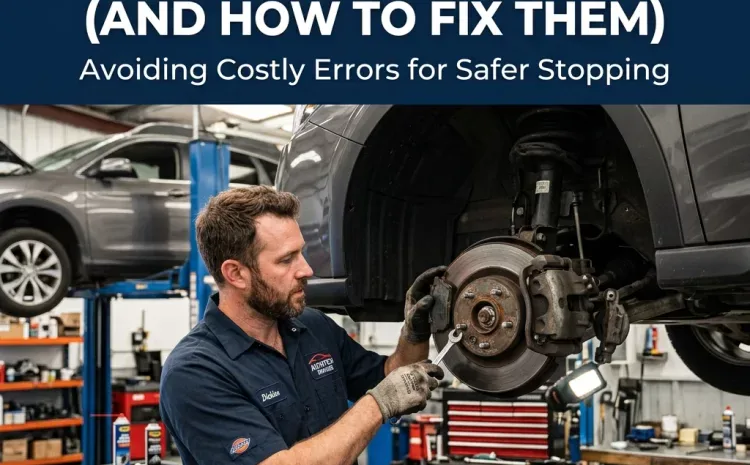
7 Mistakes You’re Making with Your Brake Repair (and How to Fix Them)
We’ve all been there. You’re driving down US-1 in Hollywood, and you start to hear that dreaded squeak or feel a slight shudder when you hit the pedal. Your brakes are literally the only thing keeping your car from becoming a very expensive bowling ball, so when they act up, it’s time for action.
At MazdaPros, Inc., we’ve spent the last 25 years seeing everything that can go wrong with a brake job. While many people think of brake repair in Hollywood, FL, as a simple weekend DIY project, it’s one of those tasks where the “devil is in the details.” A small oversight can lead to noisy stops, vibrating steering wheels, or, in the worst cases, total brake failure.
If you’re handling your own car maintenance in Hollywood, FL, or just want to know what to look for when you take your car to a local mechanic in Hollywood, FL, here are seven common mistakes people make with brake repairs and exactly how to fix them.
1. Skipping the Deep Clean (The “Slap-and-Go” Method)
The most common mistake we see is people pulling out old pads and slapping new ones in without cleaning anything. New rotors often come from the factory coated in a thin layer of protective oil to prevent rust while they sit in a warehouse. If you don’t clean that off, it gets cooked into your new brake pads, ruining their friction quality immediately.
The Fix: Use a high-quality brake cleaner and a lint-free cloth to wipe down both sides of new rotors until they are bone dry. Additionally, use a wire brush to clean the hub face where the rotor sits. If there is rust or debris between the hub and the rotor, your rotor won’t sit flat, leading to a pedal pulsation that feels like a warped rotor.

2. Ignoring the Caliper Guide Pins
Your brake calipers need to move freely to apply even pressure. This movement happens on small metal rods called guide pins. Over time, the grease on these pins dries out, or the rubber boots crack, letting in Florida’s humidity and salt air. If those pins seize up, one pad will press against the rotor while the other does nothing, leading to uneven wear and poor stopping power.
The Fix: Every time you do a brake job, pull those pins out. Clean them with solvent, check the rubber boots for tears, and apply a fresh coat of high-temperature caliper-specific grease. Do not use regular chassis grease; it can’t handle the heat and will turn into a sticky mess that actually causes the brakes to bind.
3. Hanging the Caliper by the Brake Hose
We see this in DIY videos all the time: someone removes the caliper and just lets it dangle by the flexible rubber brake hose while they work on the rotor. This is a massive “no-no.” That hose isn’t designed to support the weight of a heavy metal caliper. Dangling it can cause internal tears in the hose or stress the connections, leading to a “soft” brake pedal or a future leak.
The Fix: Always support the caliper. You can use a dedicated caliper hanger, a piece of heavy-duty wire, or even a simple bungee cord. Hook it to the suspension coil spring or a sturdy part of the frame so there is zero tension on the rubber hose.
4. Forgetting to Measure and Machine the Rotors
A very common misconception in car maintenance in Hollywood, FL, is that if a rotor “looks okay,” it is okay. However, rotors wear down over time and lose thickness. If a rotor is too thin, it can’t dissipate heat effectively, leading to brake fade and even cracking under heavy use.
The Fix: You must measure the rotor thickness using a micrometer. Every rotor has a “minimum thickness” stamped on it. If it’s close to that limit, throw it away and get new ones. If it has plenty of life left but has some grooves, it needs to be “turned” or machined on a brake lathe to ensure a perfectly flat surface for the new pads to grip. If you’re unsure, our experts at MazdaPros can accurately measure them for you.

5. Using the Wrong Torque (or None at All)
Most people just tighten the caliper bolts and lug nuts until they feel “tight enough.” In the world of automotive safety, “tight enough” isn’t a measurement. Under-tightening can lead to bolts vibrating loose, while over-tightening can snap bolt heads or warp the rotor and hub assembly.
The Fix: Invest in a calibrated torque wrench. Look up the specific torque specs for your vehicle’s caliper bracket bolts and guide pin bolts. Most importantly, when you put your wheels back on, use a “star pattern” to torque the lug nuts to the manufacturer’s specification. This ensures even pressure across the rotor face and prevents warping.
6. Not “Bedding In” Your New Brakes
You’ve finished the job, the wheels are back on, and you’re ready to hit the road. But wait: you can’t just drive normally yet. New pads and rotors need to be “mated” together through a process called bedding-in. This transfers a thin, even layer of friction material from the pads onto the rotor.
The Fix: Find a quiet road (away from heavy Hollywood traffic) and perform a series of controlled stops. Accelerate to about 45 mph and brake firmly (but not enough to engage ABS) down to 10 mph. Repeat this 5 to 10 times. This builds up the heat necessary to “season” the parts. Avoid coming to a complete stop during this process, as it can leave a “print” of pad material in one spot, causing future vibrations.

7. Buying the Cheapest Parts Possible
We get it: saving money is great. But when it comes to brake repair in Hollywood, FL, you really do get what you pay for. Ultra-cheap “economy” pads often use low-grade friction materials that create excessive dust, squeal like a banshee, and wear out in half the time of quality parts.
The Fix: Opt for Ceramic or high-quality Semi-Metallic pads from reputable brands. At MazdaPros, we prioritize parts that meet or exceed OEM standards. Using high-quality components ensures your car stops quietly and reliably every single time.
Why Professional Brake Service Matters
While DIY is a great way to learn about your car, your braking system is a “safety-critical” component. There is no room for error. If you aren’t 100% confident in your ability to check every box on this list, it’s always safer to visit a trusted local mechanic in Hollywood, FL.
At MazdaPros, Inc., we bring 25 years of experience to every vehicle that enters our shop. We don’t just “slap pads on.” We perform a comprehensive inspection of your entire braking system: from the master cylinder and brake lines to the calipers and rotors.
We believe in the quality of our work so much that we offer a 12-month/12,000-mile warranty on our repairs. Whether you’re driving a Mazda or any other make, we treat your car like it was our own.
Ready for a Brake Check?
If you’re noticing a soft pedal, hearing grinding noises, or it’s just been a while since your last inspection, don’t wait until a small problem becomes a dangerous one. Proper car maintenance is the key to longevity and safety.
Feel free to check out our blog for more tips, or if you’re worried about other maintenance items, read our guide on 7 mistakes you might be making with your Mazda’s maintenance.
Stop by or give us a call today! We’re here to keep the drivers of Hollywood, FL, safe on the road.
